


On January 7, President Trump signed an executive order (EO) targeting all contractors of the Department of War to stop them from prioritizing investor returns over production capacity, innovation and on-time delivery. The reason behind the EO, titled “Prioritizing the Warfighter in Defense Contracting,” is evident in the chart below. Shareholder returns in recent years have outpaced investment at most large U.S. aerospace and defense (A&D) companies.
Returns as a share of investment, total of 2023 and 2024 financial years (%):
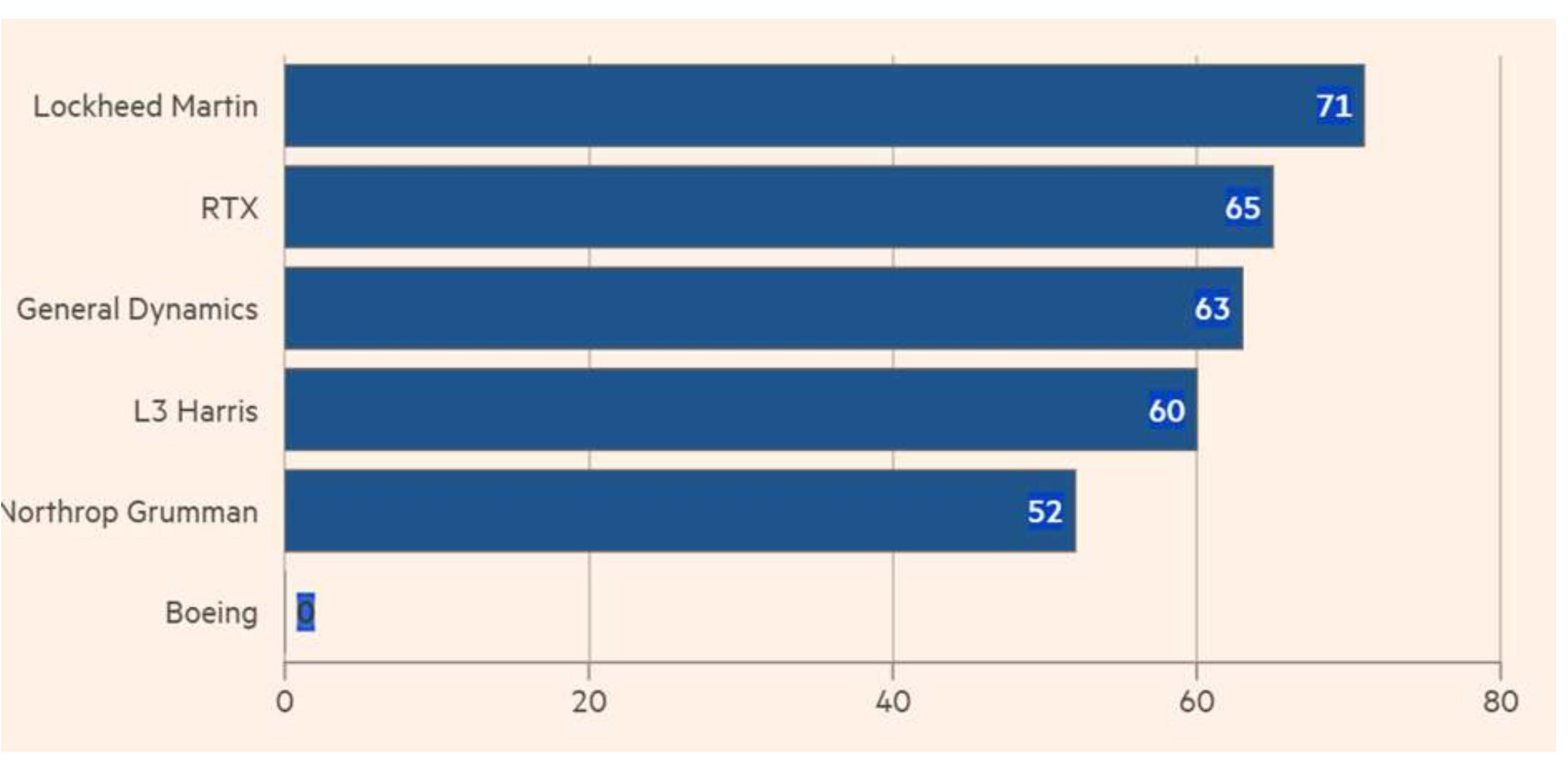
Source: Jefferies • Investment = capital expenditures and R&D. Shareholder returns = dividends and share buybacks.
While Boeing has relatively little stock buybacks or dividends over the two-year period, Boeing spent an estimated $68 billion on share repurchases and dividends between 2010 and 2019, after which they limited activity to rebuild their balance sheet.
Key directives under this order include:
- Stop stock buybacks and dividends among defense contractors until defense orders are delivered on time, on budget and with superior quality.
- Prioritize investment in production capacity, innovation and on-time delivery over shareholder returns.
To enforce the outcomes that the administration seeks, the EO directs the Secretary of War to conduct periodic reviews to identify contractors that are underperforming, not investing sufficient capital in production and prioritizing investor returns. Companies found deficient will have 15 days to submit a remediation plan.
If remediation plans are deemed insufficient or unresolved, the Secretary may immediately pursue remedies such as contract amendments, invoking the Defense Production Act authority and/or use other contract enforcement actions.
Future defense contracts must prohibit stock buybacks and dividend payouts during periods of underperformance, contract noncompliance, or if the contractors are deemed to be insufficiently prioritizing investment or production speed. To enhance compliance, the EO ties executive compensation to performance metrics such as on-time delivery, production increases and operational improvements.
Finally, the EO has additional measures to encourage compliance, including the ability to halt advocacy efforts or deny foreign military sales support to underperforming contractors and for the SEC Chair to reconsider safe-harbor protections for these firms.
Action items for A&D leaders
In light of the new EO, C-suite leaders should take a proactive and comprehensive approach to align their organizations with the new regulatory landscape. Here are critical considerations that should be top of mind:
- Reassess Investment Strategies: Rather than simply halting stock buybacks, executives should evaluate how to reallocate those funds toward innovation and operational improvements. This could involve investing in advanced manufacturing technologies or AI-driven analytics that enhance production efficiency and reduce lead times.
- Develop a Dynamic Compliance Framework: Establish a compliance framework that integrates predictive analytics to assess potential compliance risks before they become issues. This forward-thinking approach can help mitigate disruptions and align with the performance metrics outlined in the EO.
- Enhance Supply Chain Visibility: Given the directive’s emphasis on timely delivery, leaders should invest in technologies that provide real-time visibility across their supply chains to identify bottlenecks and optimize operations, ensuring that production timelines are met without compromising quality.
- Focus on Talent Development: As the industry shifts toward prioritizing operational accountability, there is a pressing need for talent that is equipped to navigate these changes. Executives should consider developing specialized training programs that prepare their workforce for emerging technologies and compliance requirements.
Emphasize partnership and ecosystem development
The evolving defense landscape requires more than internal transformation — it demands strategic ecosystem development. No single organization can deliver the agility and resilience needed to compete in today’s volatile geopolitical environment.
Building partnerships with technology innovators, advanced suppliers and even nontraditional players such as commercial tech firms enables organizations to integrate capabilities, reduce risk and create flexible supply chains. These collaborations are essential to meeting new regulatory mandates and accelerating innovation in response to government directives.
This EO represents a strong shift from financial returns to operational accountability within the defense industrial base, emphasizing readiness and military production over shareholder dividends. What remains to be seen is how the Defense Industrial Base will react and whether this will achieve the desired outcome.